Monday, October 12, 2020

Reverend's Preview: SDIFF 2020: Virtual But Not Silent


We can add this month's San Diego International Film Festival (SDIFF) to the ever-growing list of events that have had to largely go the streaming route this year due to the COVID-19 pandemic. Uniquely though, the fest will still be providing opportunities for film fans to gather together in safe, socially-distanced ways at its first-ever "Virtual Village."

This re-imagined, COVID-appropriate 2020 San Diego International Film Festival will take place October 15th-18th. As the region’s premier film festival and one of the leading stops on the independent film circuit, film lovers can enjoy 114 features, documentaries and short films online in the Virtual Village and on the big screen at the Festival Drive-In Movies at Westfield UTC. Full details as well as the complete movie lineup may be accessed at the SDIFF website.

According to Tonya Mantooth, the fest's CEO/Artistic Director: “The leadership of the San Diego International Film Festival has embraced the challenges to create a new footprint that will not only serve for this year’s festival but also expand our capabilities for the long term. This commitment to re-imagining the festival is vitally important to fulfilling our mission of presenting films that create conversation in an increasingly complex and divided world.”


SDIFF is presented by the non-profit San Diego Film Foundation, which is dedicated to creating empathy through the medium of motion pictures. The foundation leverages these important conversations via partnerships with the San Diego County Office of Education and the San Diego Unified School District, using cinematic storytelling to help educate future leaders on key issues affecting our communities and world. Their newest partnership is with the UC San Diego Extension to create a Social Impact Film Channel on the UCTV platform, which will support the "17 Sustainable Development Goals to Transform Our World" set by the United Nations. The festival will curate films from around the globe to help further understanding of these UN goals as well as inspire conversations and, most importantly, action.

"This year, we are creating space in our Virtual Village for panels around some films that examine important conversations we want to have," Mantooth revealed. "We have programmed some impactful and timely documentaries about the Civil Rights Movement. We are thrilled that Leon Clark, General Manager of Channel 10, will moderate a discussion on those documentaries for us, examining history and where we find ourselves as a country today." This sounds especially important in preparation for the upcoming US presidential election. Also to be screened are films that explore the issues of developmental disabilities, homelessness, prejudice, pollution of the world’s rivers, animal and environmental extinction, sustainability, sex trafficking and more.


Other topics to be covered are LGBTQ lives and the military, with one standout documentary incorporating both. Surviving the Silence relates a little-known story that took place years before the US Armed Forces' failed "Don’t Ask, Don’t Tell" policy, which allowed LGBTQ soldiers to serve so long as they kept their sexual orientation under wraps. Colonel Patsy Thompson was forced to expel Colonel Margarethe Cammermeyer of the US Army for being a lesbian. However, the way that Thompson – a closeted lesbian herself – presided over the discharge hearing eventually led to Cammermeyer’s re-instatement via federal court and the undoing of "Don't Ask, Don't Tell."

Cammermeyer’s memoir, Serving in Silence, was adapted as a 1995 television movie produced by Barbra Streisand and starring Glenn Close, but Thompson’s own story remained a secret. In Cindy L. Abel's new documentary, Thompson and her wife, Barbara Brass, candidly share how they wrestled with heart-wrenching choices that included hiding their relationship and struggling to protect their love while preserving Patsy's military career. They emerged to become vibrant activists later in life, with Thompson coming out to her family and the public at the age of 80. As she states in the film, she has learned "the freedom that comes with living your truth."


Prior to Surviving the Silence, Abel directed and produced the award-winning Breaking Through, a documentary in which openly-LGBTQ elected officials share their stories of self-doubt and triumph over multiple barriers. Her earlier film reveals a deeply personal, rarely seen side of both politicians and LGBTQ people. She was named “Best Filmmaker” by The Georgia Voice in 2019 and has served as National Co-Chair of the Gay & Lesbian Victory Fund, Vice-Chair of the Atlanta Film Festival, and Vice President of Communications of Women in Film & Television Atlanta.

Speaking about the inspiration behind her new documentary, Abel said "the first thing I fell in love with was (Thompson and Brass's) love story; I was fascinated that here were these women who had been together for 30 years and for much of that time had to pretend that they were not together." Abel sensitively examines each woman's personal background, which includes the fact that Brass is the Jewish daughter of two Holocaust survivors.

The highlight of Surviving the Silence is its climactic reunion of Thompson and Cammermeyer. The pair had not met since the fateful military trial in 1992. Both women admirably express their appreciation for each other 28 years later and continue to fulfill the Army motto of "duty, honor, country." This movie is a must-see.


Another LGBTQ-interest entry in this year's SDIFF is the provocative thriller, Through the Glass Darkly. A year after their daughter disappears, same-sex partners Charlie (Robyn Lively) and Angela (Bethany Anne Lind) continue to grow apart in the small town of Elrod, Georgia. When another girl goes missing, Charlie becomes convinced that the cases are connected and teams up with Amy (Shanola Hampton), a pushy reporter. This unlikely duo draws suspicion and contempt from local law enforcement but will stop at nothing to expose the town’s darkest and most devastating secrets.

Despite the current, necessary restrictions, SDIFF is taking a bold approach to what a film festival can look like in the COVID era. As Fest CEO Mantooth stated, "Film has the power to shift our perspective and allow us to look at topics through someone else’s lens. We look forward to doing a lot of that this year.”

Reviews by Rev. Chris Carpenter, resident film and stage critic of Movie Dearest and Rage Monthly Magazine.

Monday, October 5, 2020

Reverend's Reviews: Classically Queer Horror Movies


As we enter the spooky month of October, it seems there are more things to be afraid of this year than ever before! An ongoing global pandemic, an openly hostile presidential election and an unexpected opening on the Supreme Court are scary stuff indeed. Horror movies are traditionally popular in preparation for Halloween but I thought it might be more comforting, as well as more interesting, to look to the past than the present.


Monsters, ghosts and ghouls have consistently haunted movie screens since the very beginning of the film industry. One of the first was a 1910 adaptation of Frankenstein produced by inventor Thomas Edison. The Golem, The Cabinet of Dr. Caligari and Nosferatu soon followed. This last film, as well as an early version of Dr. Jekyll and Mr. Hyde titled The Head of Janus, were directed by German expressionist F.W. Murnau, who was openly gay.


In fact, there were many gay men, lesbian women and other queer artists both behind and in front of the camera for these early horror offerings. They can be considered queer in several different ways, according to Harry M. Benshoff in his book Monsters in the Closet: Homosexuality and the Horror Film (paid link). He wrote: "By 'queer,' I mean to use the word both in its everyday connotations ('questionable... suspicious... strange...') and also as how it has been theorized in recent years within academia and social politics... (it) is what opposes the binary definitions and proscriptions of a patriarchal heterosexism."

Benshoff goes on to define four ways in which a horror movie can be considered LGBTQ:
  1. The film includes identifiably LGBTQ characters;
  2. The film is written, produced, and/or directed by an LGBTQ filmmaker, even if it does not contain visibly LGBTQ characters;
  3. The film incorporates subtextual or connotative LGBTQ elements (including LGBTQ actors); and
  4. Any film viewed by an LGBTQ spectator might be considered queer due to "the queer spectator's 'gaydar,' already attuned to the possible discovery of homosexuality within the culture-at-large."

Here is a rundown of some of the most significant queer horror movies produced between 1930 and 1965:

"It's fun to stay at the Y...."
Frankenstein (1931), The Old Dark House (1932) and Bride of Frankenstein (1935):
This early trifecta of scares (though not without some welcome, knowing laughs) were all directed by the great James Whale. In 1998, Whale became the subject of gay director Bill Condon's film Gods and Monsters, which explores Whale's homosexuality in explicit detail. The handsome but closeted gay actor Colin Clive plays Dr. Frankenstein in both the original film and its sequel, and the character's relationships with his henchman Igor as well as fellow mad scientist Dr. Pretorius (wonderfully played by the bisexual Ernest Thesiger) definitely have homoerotic and/or campy shadings.

When Boris Met Bela...
The Black Cat (1934):
Horror greats Boris Karloff and Bela Lugosi co-star (for their first of eight films together) as frenemies who delight in torturing each other, both psychologically and physically. As Benshoff notes in his book, they are essentially "a sadomasochistic queer couple who dabble in all sorts of queer romance: Satanism, incest, necrophilia and bestiality." They do so in a spectacularly strange, expressionist house. The film has been assessed more recently as prefiguring the decadence and depravity of Nazi Germany.

The Hunger from Hungary
Dracula's Daughter (1936):
The stunningly beautiful Gloria Holden thrills and chills in the title role of this lesbian-leaning sequel to 1931's Dracula. Unlike most vampires, she wants to be cured of her blood-sucking condition and become "free to live as a woman." As her high-society alter ego, Hungarian Countess Zaleska, she seduces women as well as men. She also has a bitch-queen manservant who frequently comments with disdain on their shared plight as representatives of a minority.

Faster pussycat, kill, kill
Cat People (1942):
This may be my fave of the oldies, and I love its more graphically kinky 1982 remake even more. A mysterious woman, Irena (Simone Simon), with a history of difficulty with men (ahem) learns she is the descendant of a mystical race of humans who turn into panthers when they become sexually aroused. Will a handsome psychiatrist "cure" her of her deviant sexuality once he marries her in order to make love to her? While the subject matter is handled discreetly in the original, stylish director Val Lewton (who began his career as a pornographic novelist and was a nephew of lesbian actress Alla Nazimova) pushes things as far as probably any filmmaker could at the time.

Fop Culture
The Picture of Dorian Gray (1945):
The Catholic-run Hollywood Production Code of the time tried to stamp out all LGBTQ references in studio films. Nevertheless, this adaptation of Oscar Wilde's queer novel about a man whose portrait ages instead of him is the most overtly gay movie of the era. Hurd Hatfield, who was never romantically linked to women and never married, stars as Dorian, with the caustic yet debonair George Sanders co-starring as Lord Henry. They essentially play a foppish gay couple doomed by one partner's narcissism. Sound familiar?

Damn, Teenage Frankenstein was ripped...
I Was a Teenage Werewolf (1957), I Was a Teenage Frankenstein (1958) and I Married a Monster from Outer Space (1958):
Hunky young Michael Landon and Gary Conway, respectively, are both exploited by queer mad scientists in the first two films, which were big hits with the 1950's drive-in crowd. In the third, an unsuspecting young woman becomes betrothed to an alien (handsome Tom Tryon) who seeks out male members of his kind in public parks by night (double ahem). These movies are more comedic than scary by today's standards but still offer queer food for thought.

The black turtleneck proves it.
The Haunting (1963):
Adapted from queer author Shirley Jackson's The Haunting of Hill House, this was one of the scariest movies I watched as a kid and it remains effective today. Among the investigators of a ghost-infested estate is a seemingly-fearless lesbian, Theodora (played by Claire Bloom). Her sexual orientation isn't specified in the film but it doesn't have to be. A 1999 big-screen remake starring Catherine Zeta-Jones as Theodora as well as 2018's The Haunting of Hill House on Netflix have presented the character as out and proud, but they don't top the original movie when it comes to inducing goosebumps.

How many of these have you seen? This month provides a great opportunity to check them all out, especially in the absence of Halloween parties. These classic scary flicks might just provide a welcome distraction from real-life frights!

By Rev. Chris Carpenter, resident film and stage critic of Movie Dearest and Rage Monthly Magazine.

Monday, September 14, 2020

And the 2020 Dorian TV Awards Go To...


SCHITT'S CREEK
Best TV Comedy, Best LGBTQ TV Show,
Best TV Performance - Actress: Catherine O'Hara,
Best Supporting TV Performance - Actress: Annie Murphy,
Best Supporting TV Performance - Actor: Dan Levy


KILLING EVE
Best TV Drama


WATCHMEN
Best TV Movie or Limited Series,
Most Visually Striking Show


BAD EDUCATION
Best TV Performance - Actor: Hugh Jackman


92ND ACADEMY AWARDS
Best TV Musical Performance: Janelle MonĂ¡e & Billy Porter, Opening Number


LAST WEEK TONIGHT WITH JOHN OLIVER
Best Current Affairs Program


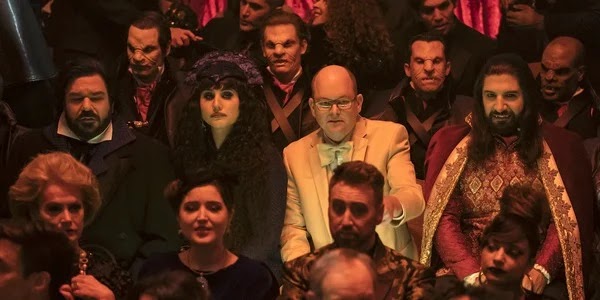
 WHAT WE DO IN THE SHADOWS
Best Unsung TV Show


TIGER KING: MURDER, MAYHEM AND MADNESS
Campiest TV Show


DAN LEVY
Wilde Wit Award - Honoring a performer, writer or commentator whose observations both challenge and amuse


Congratulations to the winners of the 2020 Dorian TV Awards, presented by GALECA, The Society of LGBTQ Entertainment Critics (of which Movie Dearest's own Chris Carpenter and myself are members). Click here to watch all the glitz and glamour of the very first televised Dorian Award "toast" on Revry TV, a new streaming service that offers "queer TV 24/7". The special includes appearances from such "gay-list" talent as Margaret Cho, Laverne Cox, Lea DeLaria, Chad Michaels, Alex Newell, Thomas Roberts, Bruce Vilanch and more.

Wednesday, September 9, 2020

Reverend's Preview: QFilms 2020 - International Spirit


Long Beach was long ago crowned "the international city" thanks to its well-utilized port and other commercial and cultural elements. It is most appropriate than that this year's Long Beach QFilm Festival is going worldwide for the first time virtually! The 27th annual celebration of the rich diversity and experiences of lesbian, gay, bisexual, transgender and queer people will run September 10th through 13th online.


LGBTQ cinema lovers can use a streaming device or smart TV to view more than 40 new narrative, documentary, and short films not yet seen in theaters or on major streaming platforms. Tickets are now available at the official QFilms website. An all-access festival pass that allows buyers to watch all the films may be purchased for $50. QFilms' net proceeds will support the many important programs offered by the LGBTQ Center Long Beach, known locally as simply "The Center."

“We made lemonade out of lemons this year,” said Andrew Dorado, interim executive director of The Center. “COVID-19 was not going to stop The Center from presenting unique queer stories and storytellers while raising funds to serve the community.” The Center supports more than 25,000 people a year through its outreach programs, which include youth services, senior services, counseling, legal services, domestic violence support, trans health programs, HIV and STI testing and more than 20 weekly support groups. Many of these services are currently being offered online during the pandemic.

“We are excited that this year, QFilms has the potential to not only reach our local community but also the LGBTQ community and our allies all around the world,” said the festival's founder, Robert Cano. As it does each year, the festival will award Jury and Audience awards to films in several feature and short film categories.


I know, having lived in Long Beach myself for 12 years, that it is also a uniquely diverse city from a spiritual-religious perspective. Some of the best movies to be screened during QFilms 2020 seem reflective of this diversity. My favorite among these that I have previewed is Breaking Fast. It centers on Mohammed (aka "Mo"), a medical specialist and practicing Muslim living in West Hollywood, who is still learning to navigate life one year after his conflicted boyfriend broke up with him.

Enter Kal, an all-American guy and struggling actor Mo meets at his best friend's birthday party. Kal surprises Mo soon after by offering to break fast with him each night during the holy month of Ramadan. Their attraction to each other grows but Mo is dedicated to making it through Ramadan without succumbing to "lustful" thoughts or actions. While Kal strives to be respectful of this, troubling aspects of his personal history begin to intrude on the men's blossoming relationship.

Written and directed by the talented Mike Mosallam, Breaking Fast is significant as the first gay Muslim rom-com. While the film's first half is rather light and fluffy, it's second half becomes more serious. Much of the welcome comic relief throughout is provided by Mo's flamboyant best friend as well as Mo's histrionic mother. The movie provides a respectful, intimate glimpse into Muslim family life and traditions even as it doesn't shy from addressing tensions between faith and sexuality. It also boasts supporting performances by veteran actress Veronica Cartwright (Alien, The Witches of Eastwick) and Patrick Sabongui (TV's The Flash), plus fabulous homages to both Superman: The Movie and The Sound of Music!


Tahara, directed by Olivia Peace, is another QFilms entry dealing with the time-honored conflict between sexuality and faith. Best friends Carrie Lowstein and Hannah Rosen, both Jewish, have been inseparable for as long as they can remember. When their former Hebrew school classmate commits suicide, the two girls go to her funeral as well as the "Teen Talk-back" session designed to be an opportunity for them to understand grief through their faith. But, after an innocent kissing exercise turns Carrie's world inside out, the girls find themselves understandably distracted by the teenage complications of lust, social status and wavering faith.

Also scheduled to screen is Welcome to Chechnya from award-winning director David France. His latest searing documentary shadows a group of activists who risk unimaginable peril to confront the ongoing anti-LGBTQ pogrom raging in the repressive Russian republic. Much of it is driven by Orthodox and evangelical Christian fundamentalism. Also, the recently departed LGBTQ activist, author and playwright Larry Kramer will be honored with a showing of France's Academy Award-nominated documentary How to Survive a Plague, about the early years of the AIDS pandemic and the efforts of activist groups ACT UP (co-founded by Kramer) and TAG. It also details in part the Roman Catholic Church's historic oppression of LGBTQ people.


An additional feature film highlight during QFilms will be Gossamer Folds. Produced by and featuring actress Yeardley Smith of The Simpsons, It spins a tender tale of friendship between a lonely boy and his grown-up transgender neighbor, Gossamer, as well as her retired college professor father during the 1980's.

A number of great feature documentaries to be screened include:
  • Ahead of the Curve, about Franco Stevens, the extraordinary woman who started the renowned Curve magazine and the women who carry on her fight for lesbian visibility today.
  • The Archivettes, an inspiring documentary that profiles the scrappy and determined cross-generational team of women who literally rescued history from the trash to form the Lesbian Herstory Archives.
  • Double Income, Kids, which explores the Israeli gay baby boom by following Motty and Alon, a gay couple on their year-long journey to have biological twins through their American gestational surrogate.
  • Changing the Game, Michael Barnett’s dynamic documentary that takes us into the lives of three high school athletes who are all at different stages of their athletic seasons, personal lives, and their unique paths as transgender teens.

QFilms' short film programs are some of the best-regarded on the film festival circuit, and this year is no exception. In addition to traditional men's, women's and queer/trans shorts lineups, two new short film categories are being introduced this year. Queer Activist shorts will inspire the LGBTQ community and its allies in our ongoing fight for equal rights, to live our truth, love whom we want, or serve in the military. "Dance like Everyone is Watching," meanwhile, will encourage viewers to channel one’s inner BeyoncĂ© with a collection of narrative and documentary style shorts celebrating the beauty and many movements of dance.

For the complete list of films, visit the QFilms website.

Reviews by Rev. Chris Carpenter, resident film and stage critic of Movie Dearest and Rage Monthly Magazine.