Sunday, April 10, 2011

Reel Thoughts: Show Me How You Burlesque

Leslie Zemeckis, wife of director Robert Zemeckis of Back to the Future and Forrest Gump fame, clearly has a love for the ladies of burlesque. Behind the Burly Q, available on DVD tomorrow, is a valentine to women like Sally Rand, Lili St. Cyr, Blaze Starr and numerous other fascinating women who fill the fascinating documentary. Only Gypsy Rose Lee gets a stinkweed bouquet from the other dancers, but that makes the film all the more delicious.

Behind the Burly Q charts the history of burlesque from its family friendly beginnings, through its heyday in the thirties through the fifties to its sad decline into sleazy pole dancing like Elizabeth Berkley did in Showgirls. While it lasted, however, most of the women recall a life where they had control of their careers, made money that supported their families and were never asked to prostitute themselves.


Alan Alda and Chris Costello are on hand to describe the role comedians like their dads Robert and Lou had in the shows, but Zemeckis also reveals the dark side of burlesque. The influence of the Mafia and the often hypocritical conduct of law enforcement played a part in business. Also, sometimes the ladies found the most dangerous foes to be other dancers.

The women are such larger than life creations, anyone who loves camp and drag will find plenty of inspiration in the film. There is also plenty of tassel-and-pasty-covered beauty to admire on display for those who admire the female form. None of the women consider themselves exploited, which dovetails with the retro resurgence of popularity for burlesque as an art form. Behind the Burly Q is a priceless chronicle of a lost form of entertainment.

Review by Neil Cohen, resident film critic of Movie Dearest and Phoenix's Echo Magazine.

Friday, April 8, 2011

Reverend's Review: Hanna-Do

Cate Blanchett is great as one of the wickedest witches since Margaret Hamilton in the marvelous fairy tale/shoot-'em-up hybrid Hanna, opening today nationwide from Focus Features. Though not a literal sorceress, Blanchett's amoral Marissa Wiegler is -- like the green-skinned villainess in The Wizard of Oz -- obsessed with shoes and a teenaged girl who holds the key to her potential undoing. As a modern day government agent, Marissa wields technology and a gun rather than a broom as she stops at nothing to protect classified secrets involving in-utero genetic manipulation.

The action in Hanna (and action is the operative word here) begins in a seemingly idyllic if snow-laden forest where 16-year old Hanna lives, hunts and practices impressive feats of self-defense with her father, Erik. Hanna is played with startling aplomb by Saoirse Ronan (an Oscar nominee for 2007's Atonement), and the always worth-watching Eric Bana (Star Trek) is her loving dad. It is revealed early on that Hanna is being trained for a seemingly inevitable showdown with Marissa.


Hanna starts the clock ticking when she knowingly triggers the device that will alert Marissa to her presence. You see, Hanna and her father are the sole survivors of a defunct US military project, headed by Marissa, to create future supersoldiers by tampering with infants' DNA. As former head of the project, Marissa has destroyed all other "evidence" of her work. She only has to check Hanna off her list before she can get back to more pressing matters, like brushing and scraping her teeth until they bleed.

With a sadistic, polysexual pied piper (a super creepy Tom Hollander, best known from the Pirates of the Caribbean series) and his skinhead henchmen at her employ, Marissa chases Hanna from Finland to Morocco to Germany. Along her Snow White-ish or Little Red Riding Hood-esque odyssey to reunite with Erik, Hanna meets a kindly British family (headed by Jason Flemying and Olivia Williams) and experiences friendship for the first time in her sheltered life with their precocious daughter, Sophie (a wonderful Jessica Barden, who at one point declares "I think I'd like to be a lesbian, but not one of those fat ones"). Other revelations await Hanna as she rushes headlong into a climactic encounter with Marissa and her big bad wolves at, appropriately enough, a derelict theme park inspired by the Brothers Grimm's classic stories.


Hanna is directed by Joe Wright, who has been more at home with costume dramas such as Atonement and the 2005 version of Pride & Prejudice and whose last, more contemporary film, The Soloist, flopped. Using Seth Lochhead and David Farr's smart screenplay as a starting point and backed by a pulse-pounding score by techno's The Chemical Brothers, Wright successfully melds the seemingly disparate genres of sci-fi fantasy and conspiracy action-adventure. Some of the fairy tale references get heavy handed, especially during Hanna and Marissa's final confrontation. Still, the makers of recent box office disaster Red Riding Hood will undoubtedly wish their movie had been as popular as Hanna will likely become. It also struck me that Wright could be an excellent choice to direct a future James Bond epic.

I can't close without questioning the PG-13 rating given Hanna by the good ol' arbiters of morality at the MPAA. There is more than enough bloodshed (graphic and implied) here to warrant an R rating, and it is all the more disturbing because much of the violence is wrought by a teen. Yet the MPAA doesn't hesitate to slap inspirational Academy Award-winner The King's Speech with an R rating (at least before it was re-edited) due to one brief scene involving profanity uttered by a royal adult. I think it's time to sic Blanchett's image-conscious wicked witch/government tool on those who rate the movies.

Reverend's Rating: A-

UPDATE: Hanna is now available on DVD and Blu-ray from Amazon.com.

Review by Rev. Chris Carpenter, resident film critic of Movie Dearest and the Blade California.

Tuesday, April 5, 2011

Reverend's Reviews: Hooters & Orgasms

Sexual desire among women -- and the complications that arise when said desire is not or cannot be met -- is the subject of two very different new releases. The OWLs (now on DVD from First Run Features) was fairly well-received on the 2010 GLBT festival circuit despite its dark storyline. Written and directed by Cheryl Dunye (The Watermelon Woman), its protagonists are all former members of The Screech, a fictional band whose members were the hottest lesbian music-makers around ten years earlier.

Now faded into obscurity, depressed and/or alcoholic, the ladies refer to themselves as "OWLs": Older, Wiser Lesbians. Their accumulated wisdom becomes highly suspect, though, in the wake of an accidental death at a pool party hosted by former band leader Iris (a great performance by Guinevere Turner, best known as the star, producer and writer of 1994's rightly-heralded Go Fish). They conspire to cover up the event and succeed... that is, until a mysterious stranger (Sklyer Cooper) shows up at their doorstep one night.


According to the press notes, Dunye intentionally set out to imitate "pathological lesbian" films such as The Children's Hour and The Killing of Sister George. One OWLs character notes, "Even sisters can stab each other in the back," and another states, "We're always trying to be the alpha male in our community." Do we really need to project such images in this more liberated day and age? Dunye seems concerned that younger lesbian women aren't aware of the struggles their foremothers endured. To my thinking, though, this makes as much sense as re-making 1980's notorious Cruising so young gay men today will be more cognizant of the stereotypes that previously defined us. The original versions of all these invaluable time capsules are available on home video. It would be better to screen and discuss them and note how far we've come than to recreate them.

The narrative of The OWLs is oddly interrupted at times by interviews with the actresses regarding their roles and their "collective" approach to the project. Even with these, the film runs just over an hour and its hard to think of the interludes as anything but padding. There is also a documentary about the making of The OWLs -- somewhat derisively titled Hooters -- being released separately. If lesbian viewers think I'm off, I'm certainly willing to hear from you. As it is, I can't recommend The OWLs very highly.


On the other hand, the current theatrical release Orgasm Inc. (also from First Run Features) is a must-see for women and men alike. This expose by award-winning documentarian Liz Canner delves into the pursuit of a Viagra-style drug to treat "Female Sexual Dysfunction (FSD)", aka the inability by a reported 43% of women to have an orgasm every time they have sexual intercourse. As one expert interviewed on camera notes, "(FSD) is the first corporate-sponsored definition of a 'disease'."

Orgasm Inc., which was filmed over nine years, reveals with often-clinical precision the expensive and mostly fruitless research that has gone into developing pills, creams, devices and even a nasal spray to assist affected women. The result of such labor? Viagra works as well for some women as it does for men; pornography is the most effective stimulant for both men and women; and the pharmaceutical company-backed, long-term solution of combining estrogen pills with testosterone patches can cause cancer. Wisely and thankfully, the latter proposed "treatment" was rejected by the FDA.

One interviewee's giggly likening of female orgasm to "a blooming flower" and some unnecessary animated sequences threaten to undermine Canner's insights into a very serious issue. But so long as the filmmaker sticks to disturbing facts and figures such as "The USA makes up just 5% of the world's population but it accounts for 42% of the world's spending on prescription drugs, and yet Americans don't live any longer than others," Orgasm Inc. provides a stiff tonic indeed.

Reverend's Ratings:
The OWLs: C
Orgasm Inc.: B+

UPDATE: Orgasm Inc. is now available on DVD from Amazon.com.

Review by Rev. Chris Carpenter, resident film critic of Movie Dearest and the Blade California.

Friday, April 1, 2011

Reel Thoughts: Strangers on a Train

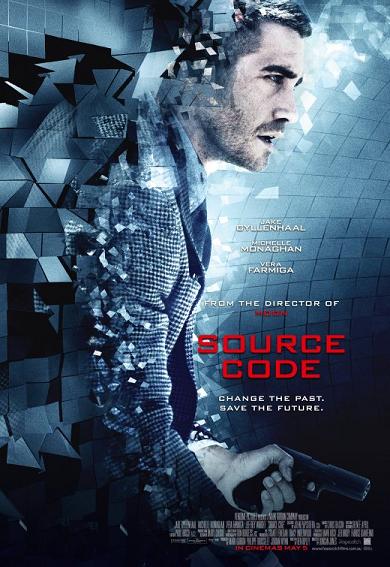
It’s unusual for a big budget action film to have deep moral and emotional resonance, but Source Code, directed by Duncan Jones, is not your usual action film. It plays with the idea of alternate realities, untapped brain potential and fate versus free will in a way that Inception could only dream of doing. Along the way, it poses some very deep questions about what we expect of our soldiers and at what point does the greater good give you the right to trample on a person’s human rights.

Jake Gyllenhaal plays Colter Stevens, a heroic Army captain who finds himself transported from his battles in Afghanistan to an isolation chamber in some unknown location. How did he get there? Is it outer space? Underground? We’re as confused as Stevens. The last thing he remembers is being on a Chicago commuter train in the body of another man. Christina (Michelle Monaghan), the beautiful woman sitting across from him, carries on a conversation as if she knows him. She’s confused by his actions, but tells him everything will be all right. At that moment, the train explodes, killing everyone onboard and propelling Stevens back to the pod.


There, he discovers that he is part of a program that places his mind into the body of a passenger for the last eight minutes of his life. Stevens has this time to unmask the bomber or he will strike again with a dirty bomb that will level Chicago. His only human contact is the sympathetic but business-like controller Carol Goodwin (Vera Farmiga) and the mission’s creator, Dr. Rutledge (Jeffrey Wright in a sinister performance). Slowly, Stevens unravels the truth behind the "Source Code" program, the gravity of his mission, and what has happened to him. He is desperate to change the events on the train and save Christina and the other passengers, but Source Code makes you wonder whether or not that is even possible. The film’s terrorist underpinnings are explored intelligently without feeling exploitative as it plays with our prejudices.

Jones, the son of David Bowie, was widely lauded for his sci-fi film Moon, which was equally ambiguous psychologically. Gyllenhaal presented him with the Source Code script, Jones explained at a Q&A earlier this month, and he was drawn to the film’s complexity. He added levity to what was a more serious, 24-like thriller. Jones also added the film’s mysterious, time-bending twist ending, which truly elevates the film above other, more formulaic time travel films. Jones recognized similarities between the film and cult TV show Quantum Leap, so he hired Scott Bakula to play Stevens’ father. There is a reveal towards the end of the film that is so visually powerful, audience members at the screening could be heard stifling tears. When a Hollywood action film can achieve that, you know that you have seen a unique story that bridges the standard genres of science fiction, drama and war films. Source Code may have a generic-sounding title, but it is a stunning original.

UPDATE: Source Code is now available on DVD and Blu-ray from Amazon.com.

Review by Neil Cohen, resident film critic of Movie Dearest and Phoenix's Echo Magazine.