Tuesday, January 2, 2024

Reverend's Reviews 2023: A Queer Year for Movies


Last year presented unusual challenges for Hollywood and the global film industry. Strikes by both writers and actors halted production for months and delayed the release of some movies. New entries in time-honored franchises like the Marvel Cinematic Universe, Indiana Jones, Disney-Pixar animation and Mission: Impossible underperformed, especially in light of their expensive budgets. And then there was the "Barbenheimer" phenomenon, although that turned out to be one — make that two — of the year’s box office success stories.


One could say it was a queer year for movies, both in terms of the historic definition of queer as “strange” or “unusual” and its modern, positive usage by our LGBTQ community. Several of the year’s best productions boasted LGBTQ stories, cast members and/or filmmakers.


Here is this critic’s rundown of the best and worst cinematic offerings of 2023. Please note: As usual, there were a few acclaimed releases I wasn’t able to see before press time including Poor Things, Wonka and Killers of the Flower Moon.

1. Taylor Mac’s 24–Decade History of Popular Music (Telling Pictures and HBO/Max). A simply stunning documentary/theatrical recording of this queer artist’s now-legendary 2016 stage show. Performed over 24 hours but effectively edited down to two while adding intimate backstage moments (including fabulous costume changes), this is the closest we will get to attending Mac’s event that covered American music from 1776 to 2016. Not to be missed and now streaming on Max.
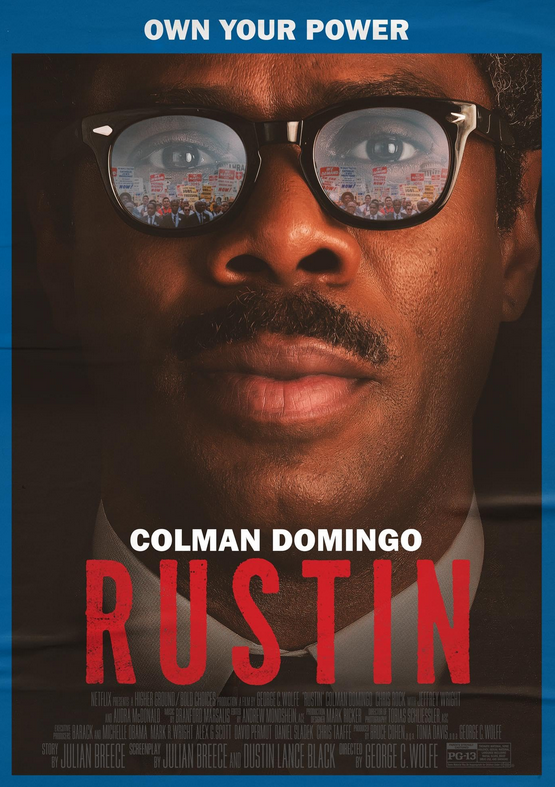
2. Maestro and Rustin (both Netflix). Two revealing, inspiring biopics about queer icons. With Maestro Bradley Cooper directs and stars as conductor-composer Leonard Bernstein, and the film doesn’t shy away from depicting Bernstein’s relationships with men as well as the more challenging aspects of his longtime marriage to a woman. Meanwhile, out actor Colman Domingo was riveting as gay civil rights activist Bayard Rustin, who suffered and sacrificed much behind the scenes of the 1963 March on Washington but is finally getting his due.

3. Barbie (Warner Bros). I still can’t believe Mattel approved Greta Gerwig’s meta, patriarchy-skewering take on the toy company’s iconic doll but I’m glad they did. Margot Robbie and Ryan Gosling were perfectly cast as Barbie and Ken, as were the members of the film’s extensive ensemble playing additional Barbies and Kens. Candy-colored, smart, and utterly delightful.

4. All of Us Strangers (Searchlight Pictures) and Past Lives (A24). A pair of achingly romantic tales that span time, geography and even the philosophical/metaphysical. In the first, a gay man unexpectedly grows in not only a deeper connection with his handsome neighbor but with his long-dead parents. In Past Lives, two childhood sweethearts originally from Korea reconnect at different points through subsequent decades. Both films are beautifully directed, written and acted.

5. The Zone of Interest (A24). Life is perfect for Rudolf Hoss, his wife Hedwig and their children. He is well-paid and well-respected at his job, and they have a lovely home with a spacious adjoining garden. That their home is next door to the Auschwitz concentration camp where Rudolf serves as Commandant serves as the chillingly ironic core of Jonathan Glazer’s gorgeously horrific adaptation of Martin Amis’ novel. Its depiction of how easily nice, intelligent people can do evil things in the interest of a political cause serves as a timely warning today.

6. The Lesson (Bleecker Street) and Saltburn (Amazon MGM). Two sharply written, memorable critiques of class differences that also happen to share the always welcome British star, Richard E. Grant. In both, eager young men become manipulated and/or manipulators in their desire for the best things in life. These films also offer a fair share of homoerotic tension courtesy of attractive actors Daryl McCormack, Stephen McMillan, Jacob Elordi, Archie Madekwe and Barry Keoghan. Keoghan’s climactic “victory dance” in Saltburn is alone worth the price of admission/rental.

7. The Holdovers (Focus Features). Oscar-winning filmmaker Alexander Payne returns to the academic setting of his previous hit Election (1999) for another superb, comedic-dramatic take on interpersonal relations. Paul Giamatti is great as usual as a curmudgeonly teacher who gradually softens after being saddled with a homeless student during Christmas break. This could well become a holiday season classic over time.

8. Mission: Impossible- Dead Reckoning Part One (Paramount). I’ve long enjoyed this venerable film series led by superstar Tom Cruise, although the last two entries fell a little flat for me. However, this latest entry — in which Cruise’s Ethan Hunt and his crew are pitted against an elusive AI bent on world domination — was smart and thrilling. It also features amazing stunts and special effects set pieces. I can’t wait for Part Two!

9. The Blackening (Lionsgate) and Slotherhouse (Gravitas Ventures). These riotously funny horror-comedies took me by surprise. Out talent Dewayne Perkins co-wrote The Blackening’s satiric take on serial killer tropes, while Slotherhouse co-stars both a queer/non-binary actor as one of its sorority girl subjects and an amusingly convincing puppet as its adorable — though psychotic — killer sloth!

10. American Fiction (Orion/Amazon MGM). Jeffrey Wright is typically terrific as a frustrated writer and professor who writes an outrageously stereotypical, black-themed novel out of spite. He then grows even more frustrated when his book becomes a bestselling award-winner! Cord Jefferson makes an impressive feature debut with his direction of this thought-provoking movie as well as his screenplay adapted from Percival Everett’s 2001 novel Erasure.

Of course, not all movies can be so great, sadly. The 2023 movies that most made me want my money and/or time back after watching them are:

1. Cocaine Bear. Though allegedly inspired by a true story, this was simply the most ridiculous film of the year and a waste of several talented actors including the late Ray Liotta, not to mention director Elizabeth Banks. The bad CGI used to create the bears also didn’t help.

2. Fair Play. This has received some acclaim from fellow critics, but I found its plot about partnered/engaged co-workers whose relationship takes a nasty turn after one of them is promoted over the other at work, misogynistic and thoroughly unpleasant.

3. 65. A.k.a. Jurassic Park meets Back to the Future, in which advanced aliens crash land on Earth during our prehistoric past and quickly find themselves dinosaur food. Redundant and ludicrous.

4. Meg 2: The Trench, The Nun II and Transformers: Rise of the Beasts. A trio of repetitive sequels no one needed.

5. Evil Dead Rise. Gruesome, urban-based reboot of the demonic horror series that, to my knowledge, no one asked for.

Here’s to a happy and cinematic new year!

Reviews by Rev. Chris Carpenter, resident film and stage critic of Movie Dearest and Rage Monthly Magazine.

Monday, December 18, 2023

Reverend's Interviews: Strangers No More


Suppose you suddenly feel inspired to visit your childhood home, as we sometimes do as adults. Once there, you greet your loving parents and hang out with them a while. There’s just one thing amiss: your parents have been dead for the last 30 years.


Such is the unusual scenario in which central character Adam finds himself in the new, gay-interest drama All of Us Strangers. The film is scheduled for theatrical release beginning December 22nd by Searchlight Pictures. Loosely based on Taichi Yamada’s horror-leaning 1987 novel Strangers, it was written and directed by acclaimed filmmaker Andrew Haigh.


As adapted by Haigh, All of Us Strangers is set in contemporary London. Adam (played by out actor Andrew Scott) has a chance encounter one night with a mysterious neighbor, Harry (Paul Mescal, an Oscar nominee earlier this year for Aftersun). This punctures the rhythm of the reclusive Adam’s everyday life. As a romantic relationship develops between him and Harry, Adam becomes preoccupied with memories of the past. He eventually finds himself drawn back to the suburban town where he grew up and the childhood home where, to his surprise, his parents are still living. Mum and Dad also happen to look just as they did on the Christmas Eve they both died three decades earlier. Adam and his parents (super)naturally begin to catch up on their lost time.

Out filmmaker Andrew Haigh previously wrote and directed three award-winning feature films: Lean on Pete (2017), 45 Years (2015) and the explicitly gay Weekend (2011). He was also executive producer and lead writer-director on the popular HBO series Looking (2014-2016).

Recalls Haigh, “What I loved about the novel (Strangers) was its central conceit: What if you met your parents again long after they were gone, only now they’re the same age as you? It seemed such an emotional way to explore the nature of family. That became my starting point.” But he placed the story in a world more recognizable to his/our own. “Adapting the book was a long and sometimes painful process,” Haigh admits. “I wanted to pick away at my own past as Adam does in the film. I was interested in exploring the complexities of both familial and romantic love, but also the distinct experience of a specific generation of gay people growing up in the 1980s. I wanted to move away from the traditional ghost story of the novel and find something more psychological, almost metaphysical.”

Author Yamada and his family were respectful of Haigh’s vision, which changed the central character of the story to a gay man, and gave their blessing to make the film. The project then attracted the extraordinary acting quartet that is Andrew Scott (perhaps best known in the US as “Sexy Priest” from the Amazon series Fleabag), Paul Mescal (also acclaimed — and frequently naked — in the Hulu series Normal People), the ever-adorable Jamie Bell (Billy Elliot, Film Stars Don’t Die in Liverpool) and the lovely Claire Foy (Women Talking, The Crown).

After watching All of Us Strangers, I was struck by not only how moving the story is but how delicate it is in terms of cinematic structure. I’ve rarely if ever used the word delicate to describe a movie, but it certainly fits here. This became a topic of conversation when I was privileged last month to interview several of the artists involved in making the film: director of photography Jamie D. Ramsay, SASC; editor Jonathan Alberts, ACE; and composer Emilie Levienaise-Farrouch. The following are excerpts from my Zoom conversations with these amazing technicians.

Ramsay is a South African/British Director of photography. He is known for his cinematography on the breakthrough, gay-themed South African film Moffie. He next helmed the period drama Mothering Sunday and then re-connected with Moffie director Oliver Hermanus to make the Academy Award- nominated Living.

CC: It’s nice to meet you! I want to say congratulations to you for your excellent work on this film but also Moffie and Living. They’re all great films and well-shot. What drew you to this particular project or this story?
JDR: You know, when you look at a project that you’re going to be spending your life force on and your time that you’ll never get back, this beautiful life we live, you need to pick it correctly. You look at the filmmakers involved and you look at the script itself and the project as a whole in regards to cast and everything that’s involved, and within that you develop your idea of the film. I think with this movie first and foremost was to work with Andrew Haigh, something I’ve always wanted to do, and then the blessing of such an incredible script that I couldn’t put down when I started reading it. It resonated with me on such a deep emotional level.

CC: Comparing this and Moffie, another gay-themed story, would you say your approach differed or varied between the two stories in any way?
JDR: The big difference for me between this film and Moffie is that Moffie is a story about unrequited love because of how homosexuality was deemed as a sin in the 80’s in South Africa. This movie that we’ve made, All of Us Strangers, is not that. It’s a love story. It’s not a gay movie, it’s a love story. It transcends being a gay film beautifully. You don’t watch the love scenes and think “it’s a gay love scene.” You watch a love scene, and this is a love story about forgiveness: about self-forgiveness, about the cathartic process of letting go of trauma, and for me that’s the big difference.

CC: Great, thanks for clarifying that. When it comes to your photography and filming All of Us Strangers, what were some of the factors or conditions that guided your choices?
JDR: First and foremost, Andrew and I wanted to make a movie that represented the concept of nostalgia, that represented the concept of being locked in a place in your life where your best memories were 15 or 20 years before. For us to embody visually this idea of memory and nostalgia was very important to us. It was very important to create a very subjective journey, a subjective experience of loneliness from the inside out. The camera always needs to feel as if it was the unseen friend in the room rather than an objective camera telling the story. All of our conversations were really about feeling, about the metamorphosis of the journey and what feeling we wanted to embody as filmmakers, and how best to do that very subtly from a visual perspective.

CC: I spoke with Emilie the composer and the editor, Jonathan, earlier and that word subtle came up with both of them. And also I described the film as being very delicate, a very delicate story and a very delicate film. It seems as if one factor — if the photography had been too dark or too bright, or if the music had been too loud or too frantic — the whole thing could have fallen apart. It’s just a perfect balance that you all found in that delicacy. Do you have any thoughts about that?
JDR: Thank you. Yeah, you know while you were saying that I was just thinking about how delicate our existence on this planet is. We have this human experience on this world but we ultimately are made from stardust; we are carbon atoms that have this soul within us. The fact that we breathe and we think and we love and we hate is just such a delicate holding together of things, and can be unseated so quickly by an accident or by a sickness or by this or that. But in (life’s) delicateness there’s a robustness as well that drives us and a tenacity that drives us, and ultimately it’s the pursuit of love. Love is the thing that generates us forward and that’s the glue, isn’t it? This movie, for me, is really about finding that love and finding it for yourself. And that’s what I’ve got to say about that. (laughs)

Jonathan Alberts, the movie’s editor, is an alum of McGill University and the American Film Institute. His previous films include Wristcutters: A Love Story and Like Crazy, Andrew Haigh’s previous films 45 Years and Lean on Pete, and Alan Ball’s Uncle Frank.

CC: Congratulations on not just this film but all your work that you’ve done with Andrew. It’s really significant and impactful, and you obviously work well together. Maybe first and foremost, some of my readers might not know exactly what an editor does, so can you say maybe just generally what the role of the editor is or what is your approach to editing a film?
JA: Sure. You know, I think a lot of people think that editing is about continuity, it’s about making things match, and there is an aspect of that but truth is I don’t think editing is anything about that. Editing is about how to tell the best story. The first thing that you put together is not what you end up with. As an editor, you’re thinking about “how do we tell this in the best way possible” using all the variables that you have with filmmaking, which is cinematography, performance, sound design, music. Those variables provide endless permutations, so as an editor I’m taking all those things together and I’m trying to understand how best to tell that story.

CC: In terms of this particular film or this story, did you do anything different in terms of approach? Did it challenge you or call you to do something different or reflect on the approach differently than other films?
JA: I think in some ways. So, every film presents a different set of problems. With (All of Us Strangers), it’s not just a straightforward drama. It has a supernatural element, it has this fantastic fantasy side, and I think we had to really think about the tone in terms of “how was this tone going to work.” It could have gone horribly wrong in a lot of different ways. We spent about a year editing the film and it was a long time of really experimenting, of really trying to understand what the film was. I mean, you know by the script what the story is about but all of the variables that I was talking about before change. It’s a different kind of alchemy that comes to the actor’s performances and the dialogue, so as an editor you’re often thinking about that.

CC: This is a very delicate film, and that’s not a word that I’ve typically used to describe a movie, but I think it’s very true. And I think the same is true of the editing. I really think there is a delicate quality to your work that really makes the story come alive. Do you have any thoughts about that?
JA: It’s interesting because as an editor, you know, before the music composer is on board you’re building a whole temporary soundtrack for the film, so I would talk to the director about what we want it to sound like. He would send me a playlist and I would take that playlist and start building another playlist and send it to him, and it was an interesting kind of thing. You spend a lot of time as an editor thinking and feeling “let’s try this piece,” and there was a crazy number of soundtracks I’m pulling from thinking “maybe this will work.” And then the composer comes on board and starts listening to this music you’ve put on it and they end up taking all of that off. (laughs) For this film, it was delicate. It’s such an intimate film and the music was a really hard thing to nail. I think Emilie did a great job, and we had many many conversations. She was so open and so inviting about trying different things. She had all these different ideas and she was so patient about finding the sound, but she found it and I think the soundtrack is absolutely beautiful and perfect for the film.

Speaking of, Emilie Levienaise-Farrouch is an award-winning composer and artist living in London. She scored last year’s Oscar-nominated Living, starring Bill Nighy. Her previous credits include The Forgotten Battle and The Strays, both for Netflix, and MGM’s Censor.

CC: Hi Emilie! Thanks for your time and thanks for your score on this film. It’s a lovely, delicate film. What drew you to this project or story in the first place?
EL: I saw an edit of the film before coming on board and I think I had a reaction that’s pretty similar to everybody. It kind of hit me like a ton of bricks and made me cry. I was also very impressed by how you can create a story that’s so specific but also touches on themes that are so fundamental to every human being’s experience. I just thought that was so impressive, and done in a way that was so subtle and with humor at times and yet so bold. As you say, it’s colliding so many different little elements and yet it works as a whole. But mainly it made me cry and I wanted to be part of it.

CC: I know you’re relatively new to composing for film but you have some impressive credits under your belt. How did you approach composing for this film and how was it different from or similar to other projects?
EL: An approach I have to a lot of the films I work on is, generally, I have to become emotionally really close to one of the characters. I really try to understand them because all of my music comes from a place of emotional truth, so I need to be able to feel what the character is feeling. And then I know that the music I am going to write from that place is going to be truthful for the character and truthful to the story. In All of Us Strangers, it was just really connecting with Adam, which was not hard for me because I love Andrew Scott’s performance. It’s just so subtle and all in the details. And then the next step is thinking more intellectually about what are we trying to do with the score, how the score should work. There was conversation with the director and editor about warmth, there was conversation about the nature of memory, and a more technical aspect was how are we going to use the score in order to gel a complex timeline and various genres into something that feels like a whole.

CC: Wow, that’s a fascinating process. Did I detect a love theme for Adam and Harry? I kind of heard bits and pieces but I wasn’t absolutely positive.
EL: That’s well spotted! Because of this idea of fragments that we had, because of the nature of memory and things like that, it was quite important to keep it really short. We have a few fragments; three different, very short melodies. The love one is at the very start of the film, when (Adam and Harry) are in bed having that long conversation, and at the very end of the film is the main moment when it comes back. They are very, very subtle and hard to grasp. It felt like if we had melodies that were very romantic and very hummable it would not be right for the film.

All of Us Strangers will have a limited release starting this Friday, December 22nd.

Reviews by Rev. Chris Carpenter, resident film and stage critic of Movie Dearest and Rage Monthly Magazine.

Tuesday, December 12, 2023

Reverend's Reviews: Happy Holiday Theatre Roundup


Plenty of people travel to visit family and friends during this festive time of year. While I don't anticipate getting on a plane, I've recently been able to travel around the world thanks to several new, very good-to-excellent theatrical productions that I encourage all theatre lovers to check out.


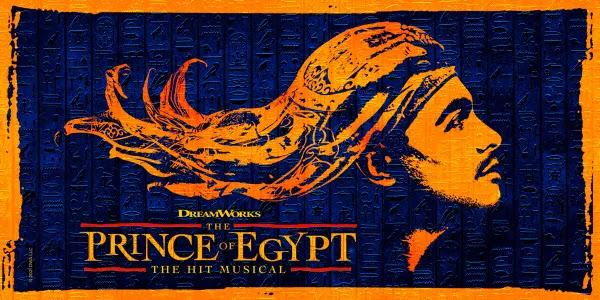
The Prince of Egypt: The Musical
For religious folk such as myself, it was a little odd when 1998's animated movie The Prince of Egypt was released during the height of the Christmas season rather than during Passover/Spring. Well, go figure: the Steven Spielberg-produced musicalization of the Old Testament's Exodus saga became a box office hit and won an Oscar for its main theme song, "When You Believe."

Acclaimed composer Stephen Schwartz (who subsequently did a little show called Wicked) revised and added to his film score for a stage adaptation of The Prince of Egypt that played the Dominion Theater in London's West End for 6 weeks in 2020, before the COVID-19 pandemic forced its premature closure. The production re-opened in mid-2021 and ran through early 2022. It was captured on film before a live audience and, in honor of the movie's 25th anniversary, was just released December 5th to buy or rent on digital from NBCUniversal.

Directed by Scott Schwartz (Stephen's son), the musical's plot centers on two unexpected adoptive brothers: Ramses, son of Egypt's pharaoh and destined to become pharaoh himself, and Moses, the biblical savior who would lead his fellow Hebrews out of Egyptian slavery. (Credit for this dramatic development should go to 20th-century film producer Cecil B. DeMille rather than anyone actually involved in writing the book of Exodus.) Tensions grow between the pair and Moses ends up exiled. God appears to him in the wilderness and commissions Moses to return to Egypt in order to free his people. Plagues descend, seas are parted, but all eventually ends well for the Hebrews.

In the stage version's biggest departure from its cinematic predecessors, things end well for Ramses too. Schwartz Sr. and book writer Philip LaZebnik decided to let Ramses survive relatively unscathed rather than be marooned in the middle of the Red Sea a la the movie. While this may upset purists, it is organic in light of the musical's more bromantic depiction of the relationship between Moses (played by hunky Luke Brady) and Ramses (the charismatic Liam Tamne). They get to reconcile during the finale and even exit the stage with their arms around each other. Viewers can definitely quibble about this from both dramatic and theological/historical perspectives.

That being said, The Prince of Egypt: The Musical is impressive both musically and visually. In addition to five of the songs he wrote for the film, Stephen Schwartz has provided no less than ten new songs. The most memorable of these are "Footprints on the Sand" and the show-stopping, dance-oriented "Simcha." Sean Cheesman's energetic choreography is best employed when the dancers embody not only humans but horse-drawn chariots and even the famed Burning Bush! The production also boasts striking scenic and costume design. Whether viewed during Christmas, Passover or some other time of year, Reverend recommends it.

From Egypt, we travel to the "non-Confederate" (as stated in the play's subtitle) American South for the current and fantastic Broadway revival of the late Ossie Davis's Purlie Victorious. Its full, winking subtitle is A Non-Confederate Romp Through the Cotton Patch. Though set during the 1950's, there are plentiful indications that the Confederacy remains alive and well on the Georgia plantation the title character and other black characters grudgingly call home.

Tony Award winner Leslie Odom, Jr. (Hamilton) plays the Reverend Purlie Victorious Judson. As the play opens, Purlie has just returned from a trip where he recruited a gullible young woman, Luttiebelle (a delightful performance by Kara Young), to present herself as the next of kin to a late worker. By doing so, Purlie hopes plantation owner Ol' Cap'n Cotchipee will release some money the worker left. Purlie intends to use the money to buy a local, long-closed church in order to preach civil rights to his neighbors.

Purlie Victorious is first and foremost — and thankfully — a comedy. But playwright Davis intended it to make more than a few serious points about the state of civil rights in the US when it first premiered on Broadway in 1961 (it was adapted into a musical, simply called Purlie, a few years later). Many Southern cities were still segregated at the time, and their black citizens were frequently dehumanized. While some things have definitely improved since then, this play's current revival makes clear we still have a way to go. This is most notable in its depiction of white police officers who are under the sway of the enduringly racist Ol' Cap'n Cotchipee.

Odom, Jr. is charming in the multi-faceted title role. He gets to be both serious and comedic, plus he gets to preach and sing a bit. I fully expect him and the previously mentioned Kara Young to receive Tony nominations in 2024. While the entire supporting cast is great, recognizable character actor Jay O. Sanders is a standout as Ol' Cap'n Cotchipee, as is Billy Eugene Jones as Purlie's duplicitous yet hapless brother. Perhaps most impressive in this Kenny Leon-directed production is Derek McLane's scenic design, which features the ramshackle home set transforming into a stately church before audience members' eyes during the play's climax. Reverend truly felt like I'd had a religious experience.

Purlie Victorious is now playing at NYC's Music Box Theater through February 4th, 2024.

In terms of theatrical geography, I next traveled north via the aptly-titled new musical How to Dance in Ohio. Inspired by an award-winning 2015 documentary, it is the groundbreaking and instantly lovable tale of a group of young adults on the autism spectrum who are preparing for their first-ever Spring formal dance. It just began an open-ended run last week at the Belasco Theater in NYC.

How to Dance in Ohio breaks ground as the first Broadway production with actors on the autistic spectrum playing the lead roles. All of them — Desmond Luis Edwards, Amelia Fei, Madison Kopec, Liam Pearce, Imani Russell, Conor Tague and Ashley Wool — are making their Broadway debuts. Additionally, the show's creators and other talent involved are on the spectrum and/or have loved ones who are. The obvious compassion, dedication and talent behind the scenes spilled onto the stage in the preview performance I attended, and I have no doubt it will continue to do so during all performances.

To their great credit, neither the musical's book nor memorable songs lecture the audience on what it means to be autistic or on the spectrum. The challenges and intricacies facing these characters are periodically revealed through their personal reflections, lyrics or mannerisms. Also significant are the sensory-friendly accommodations provided in the theater. These include quiet "cool-down" spaces, the availability of finger fidget devices, and the absence of flashing lights and loud sudden noises. Special performances during which the theater won't be fully darkened and the volume level reduced are also being offered.

I definitely encourage prospective attendees on the autistic spectrum to see the show. It's terrific and I believe you will feel powerfully represented for the first (but hopefully not last) time on Broadway!

The last stop on our "international tour" of new theatrical offerings is Argentina. The native country of acclaimed director-choreographer Graciela Daniele, it serves as the setting for The Gardens of Anuncia. This new musical inspired by Daniele's life as well as directed by her is playing at Lincoln Center in the intimate Mitzi E. Newhouse Theater through December 31st.

Daniele, whom I have long admired primarily for her work in the 1983 film version of The Pirates of Penzance, was raised by her mother, grandmother and aunt during Argentina's oppressive 1950's Peron era. Re-named "Anuncia" here as a reference to the Catholic feast of the Anunciation, she is depicted as a talented young dancer coming to terms with both her family legacy and her gifts as a performer. Daniele the director/co-choreographer (with Alex Sanchez) has assembled an all-star roster of Broadway actresses for this occasion. Eden Espinosa (Wicked) plays her mother, Andrea Burns (In the Heights) plays her aunt, and Mary Testa (Xanadu and many more) plays Granmama. Last but not least, Tony Award winner Priscilla Lopez (who played Diana Morales in the original run of A Chorus Line) serves as the older Anuncia/Graciela.

As written and composed by Daniele's longtime friend Michael John LaChiusa, The Gardens of Anuncia is a gorgeously scored and revealing piece. LaChiusa's work (which includes Hello Again, The Wild Party and Marie Christine) has often been described as "esoteric," but I dare say his songs here are his most melodic and engaging. During the performance I attended, Testa sang a bit too loudly and overpowered her castmates. Also, a bit of "magic realism" in the plot involving a talking deer (the very amusing Tally Sessions) was fun but also distracting. Anuncia/Graciela is magical in and of herself. Still, this show is well worth seeing.

And with that, Reverend wishes you all blessed holidays and a happy 2024!

Reverend's Ratings:
The Prince of Egypt: The Musical: B
Purlie Victorious: A
How to Dance in Ohio: A-
The Gardens of Anuncia: B+

Reviews by Rev. Chris Carpenter, resident film and stage critic of Movie Dearest and Rage Monthly Magazine.

Monday, November 20, 2023

Reverend’s Interview: Now Saving the Universe: Captain Faggotron!


The world is one big hot mess right now. Wars, pandemics, government dysfunction, natural disasters and increased animosity toward the LGBTQ+ community are taking a toll. We could use a hero, but Superman, Flash Gordon and Wonder Woman are apparently otherwise occupied. Who can we turn to in our time of need???


Enter the fantastic Captain Faggotron! The brainchild of filmmaker Harvey Rabbit, this new superhero for our community will be making his home video debut on November 21st courtesy of TLA Releasing. A low-budget but big-hearted and very creative movie, it wowed audiences earlier this year at numerous LGBTQ+ film festivals worldwide.

Captain Faggotron Saves the Universe is a campy comedy-fantasy about internalized homophobia, the tyranny of the closet, and fear of a gay planet. It was conceived by Rabbit as a direct (though admittedly absurd) response to multiple situations: the 2016 shooting at the Pulse nightclub in Orlando, Florida; the persecution of homosexuality in Chechnya, Russia; the election of President Donald Trump in the USA; and the violence that unfortunately follows gay and queer people of all genders throughout our lives.

When Father Gaylord, a closeted Catholic priest living in Germany, loses his precious ring, he is forced to turn to Captain Faggotron for help. It turns out that the missing ring is no ordinary piece of jewelry. It is the mystical Ring of Oberon, which has the power to turn the entire population of Earth gay. Whereas Fr. Gaylord is horrified at this prospect, his nemesis/sometimes lover Queen Bitch excitedly declares “Soon, the world will be flooded with homosexuals!” Cue the maniacal laughter.

This movie truly has something for everyone: religion, furries, men used as footrests, sex demons, animated sequences, MAGA hats, full-frontal nudity, a song about Grindr and — naturally, in light of its German setting — sausages. The title character even gets his own theme song and a dance number! As Queen Bitch queries Fr. Gaylord at one point, “Why be normal when you can be extraordinarily fabulous?”

According to the film’s website: “Captain Faggotron Saves the Universe follows a tradition deeply rooted in gay/queer history and our ability to survive. Confronting ‘straight’ and heteronormative structures, camp exposes absurdities of the mainstream in a way that allows us to laugh. Humor is a weapon, and camp is a tool of joyful resistance.”

Harvey Rabbit, the film’s writer-director, is a transgender artist living in Berlin, Germany. He has a Master’s degree in dramaturgy and a Master of Fine Arts in Experimental Theater, both from New College of California. A campaigner for LGBTQIA* and sex worker rights, his activism dates back to the mid-1990’s. Using spoken word as his medium, Rabbit stormed the stages of Northern California, speaking about feminism, queerness and empowerment.

From 2013 to 2015, he produced, curated and hosted Varieté Ridiculous, a political cabaret in Berlin focusing on sex worker rights. Rabbit’s first short film, Slowdance, premiered at the 2016 Berlin Porn Film Festival and has been shown in queer film festivals in many parts of Europe, South and Central America, and the USA. In 2017, he produced We are the Fucking World, a short film for Erika Lust. Rabbit’s most recent work, The Chemo Darkroom (2018), was selected for the shorts competition in the
Berlin Porn Film Festival, Berlin Feminist Film Week, IKFF Hamburg, and the 2019 Hacker Porn Film Festival in Rome. Captain Faggotron Saves the Universe is his first feature film.

The spirited filmmaker recently spoke with me via Zoom from his home in Berlin.

Harvey Rabbit

CC: Hi Harvey! Congratulations on making such a unique, creative film. What has been the response to it so far?
HR: Well, we just won an award! Bishop Black (who plays Queen Bitch) won the Iris Prize in Cardiff, Wales for Best Non-Binary Performance. Mostly, people are loving this film. We’ve played both LGBTQ and international film festivals. Heterosexuals are loving this film and I didn’t make it for them! I’m here to convert people. (laugh) I don’t mince words.

CC: How and when did you first conceive the story?
HR: After the Pulse shooting in 2016 in Orlando, Florida. I went into a state of shock and didn’t want to leave my apartment. Then one day, the first 12 pages of the script just kind of came out of me.

CC: This is your first feature film, correct? What were some of the challenges you faced?
HR: Yes. It’s a 72-minute film and the entirety of our budget was 20,000 Euro (approximately $21,200 US). We also had two COVID lockdowns in Germany that postponed everything. We shot basically every weekend from July through the end of October, 2020.

CC: Wow, it sounds like a true labor of love.
HR: No, it was a labor of compulsion. (laugh) I had to do this movie!

CC: Your movie has a fabulous queer cast! Did you use a formal casting process, or just cast friends or people you knew?
HR: The roles of Captain Faggotron and Queen Bitch were written specifically for the actors, Tchivett and Bishop Black. If they had said no, I couldn’t have done it. I knew Rodrigo Garcia Alves (who plays Fr. Gaylord) from the community and bumped into him on the street one day. He’s from Brazil and I thought, “Hmm, he could play the priest.” (laugh) For other roles we had auditions and readings, and everyone did it for no money. Everyone involved was gay, trans or queer, with the exception of a cis-ish member of the core creative team.

CC: Talk to me about the religious content in the movie. Are you or were you Catholic?
HR: I’m Jewish. This is not my baggage. (laugh) I really don’t know where Fr. Gaylord came from. I knew someone Catholic who thought of becoming a priest but he was really closeted. My best friend as a teenager was Catholic. We were really bad. I would spend Saturday nights at her house and we would sneak out to go party. We would get back early Sunday morning and I would sometimes go to church with her family, like two hours later. I liked the music but was not religious so hated being there. I wish a Catholic priest would come out publicly. “Just come out,” as Harvey Milk said. My movie is a fantasia on religious and gay themes but I would love it if it inspired more openness.

CC: That would be awesome. What’s next for you?
HR: I’m looking for funding to write my new script, Cancer Made Me Trans. It also has comedy and fantasy elements like Captain Faggotron, and I’ll leave it at that.

CC: I can’t wait! Well, I wish you the best and much continued success.
HR: Thank you so much!

For more information about the movie, visit TLA Releasing.

Interview by Rev. Chris Carpenter, resident film and stage critic of Movie Dearest and Rage Monthly Magazine.